
Multi-Tiered System of Supports
What Is MTSS?
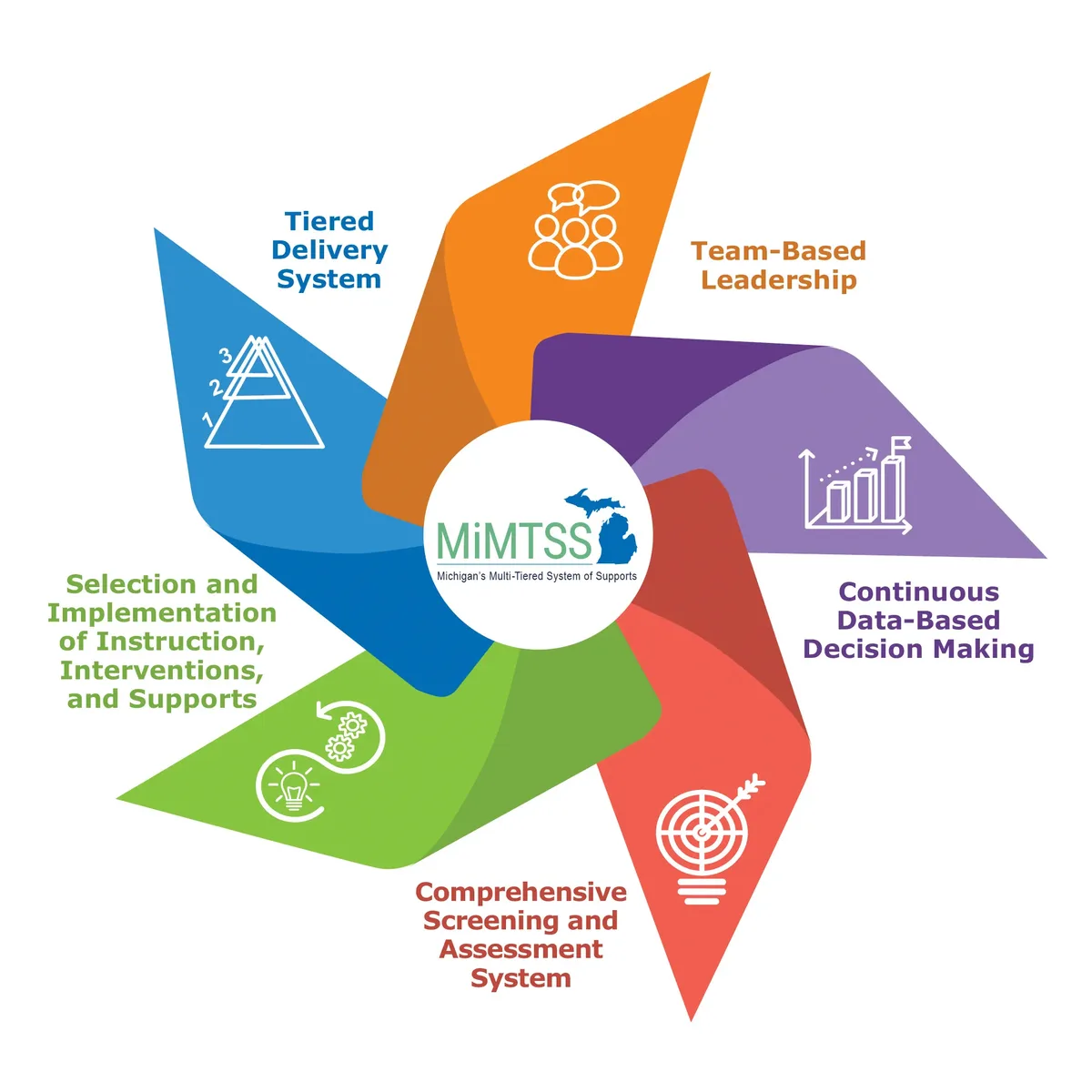
Multi-Tiered System of Supports (MTSS) is an educational framework used in schools to provide a systematic, data-driven approach to supporting students' academic, behavioral, and social-emotional needs. MTSS ensures that all students receive the appropriate level of support and intervention to help them succeed.
Marquette-Alger RESA supports local districts in implementing MTSS through coaching, professional development, data analysis, and a review process developed in partnership with CAREI (Center for Applied Research and Educational Improvement) at the University of Minnesota.
MTSS Review Process
The MTSS review process is a partnership between Marquette-Alger RESA, CAREI (Center for Applied Research and Educational Improvement at the University of Minnesota), and local education agencies to review MTSS implementation and develop plans for improving student outcomes.
Continuum of Support
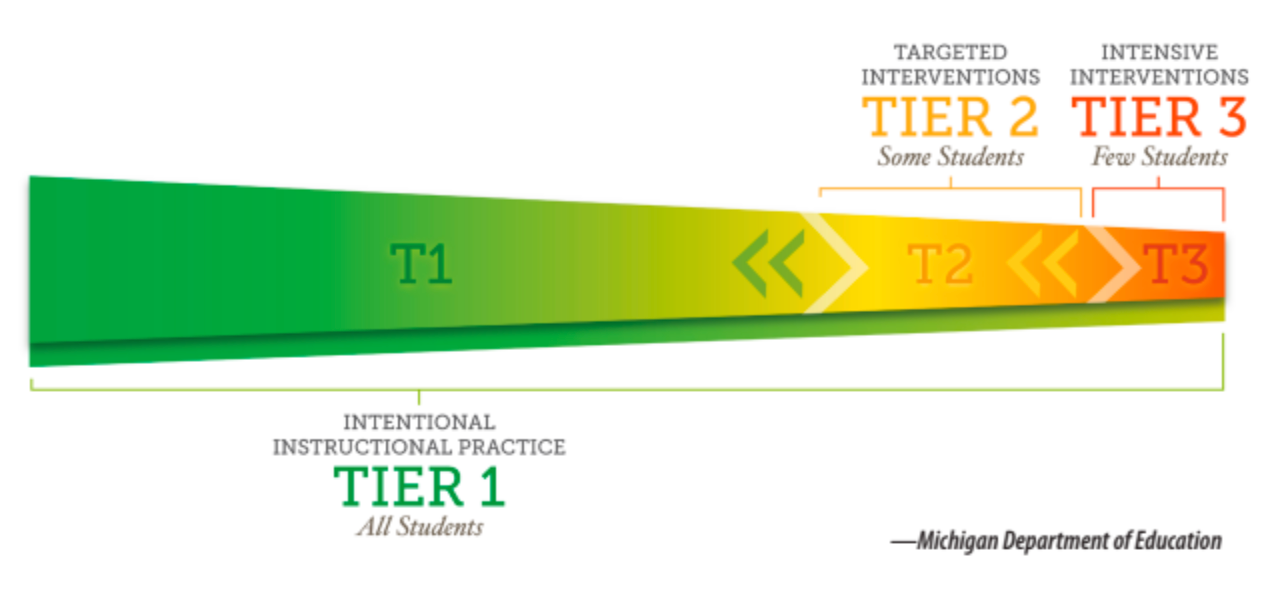
A tiered approach to student support and intervention.
Universal — All Students
High-quality, evidence-based core instruction and positive behavior support for all students in the general education setting.
Quality Core Instruction
Evidence-based instruction in academic subjects aligned with curriculum standards, accessible and effective for the majority of students.
Positive Behavior Support
Strategies for promoting positive behavior and social-emotional skills through an inclusive school climate with explicitly taught expectations.
Preventative Measures
Proactive strategies addressing potential challenges before they escalate into more significant academic or behavioral issues.
Targeted — Some Students
More specialized interventions for individuals or small groups identified through data analysis as needing additional support.
Identification
Students identified through data analysis and assessment as needing more specific support beyond Tier 1 interventions.
Customized Support
Tailored interventions for specific areas of need — targeted reading support, social skills training, or behavioral coaching.
Progress Monitoring
Regular data collection to evaluate intervention effectiveness and determine whether adjustments are needed.
Intensive — Individual Students
The most intensive, individualized interventions for students requiring specialized support including possible special education services.
Individualized Plans
Highly personalized intervention plans based on thorough assessment of strengths, weaknesses, and areas of concern.
Specialized Instruction
One-on-one instruction or very small-group settings. May include special education services for students with disabilities.
High Frequency & Duration
Increased instructional time and ongoing support, often extending beyond the regular classroom schedule.
Core Components
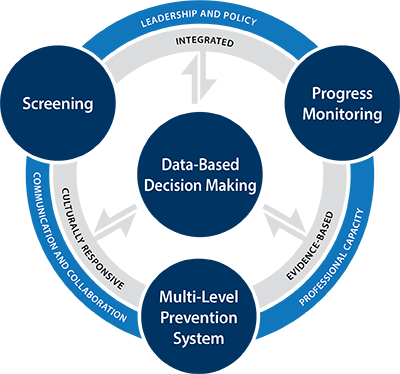
The pillars that drive effective MTSS implementation.
Universal Screening
Systematic assessment of all students using standardized tools to identify those who may need additional support. Conducted regularly throughout the school year.
Progress Monitoring
Ongoing assessment to track students' academic, behavioral, and social-emotional progress. Drives data-driven decisions about intervention effectiveness.
Data-Informed Decisions
Using assessment data to determine appropriate tier placement, evaluate intervention effectiveness, and allocate resources where they're most needed.
Shared Leadership
Multi-disciplinary teams of educators, psychologists, counselors, and specialists collaborate to analyze data and develop intervention strategies.
Evidence-Based Practices
Evidence-based practices provide a foundation for effective decision-making and intervention at every tier.
Ensures interventions produce positive results efficiently, optimizing resources and time
Promotes fidelity — interventions are delivered as intended across all tiers
Grounded in the most up-to-date and reliable research in the field
Provides clear standards against which intervention effectiveness can be measured
Family & Community Engagement
A collaborative, holistic, and culturally responsive approach to student success involves shared responsibility among educators, families, and the community.
Holistic support addressing academic, social, emotional, and cultural factors
Shared responsibility for student success across all stakeholders
Open communication between schools and families
Culturally responsive practices within the school environment
Early identification of potential issues for timely interventions
Empowered families actively participating in decision-making
MTSS Contact